

Use of Technology in Fast & Right Hiring
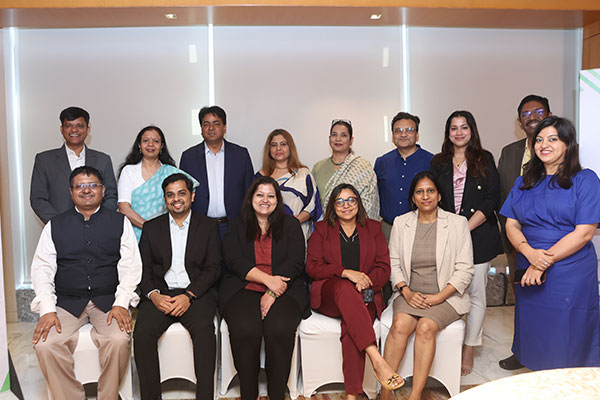
Insights from the Leadership Roundtable hosted by StepUp HR in Association with NHRDN
Executive Summary
The recruitment landscape has undergone a seismic transformation in the last decade. Today, organizations are not just seeking talent; they are striving for the right talent, acquired at speed, without compromising on quality, fairness, and human judgment. Technology, particularly Artificial Intelligence (AI) and automation, has become an indispensable tool in scaling recruitment processes. However, the human aspects of hiring—intuition, empathy, cultural alignment, and ethical judgment—remain irreplaceable.
This white paper explores the insights from the session on “Use of Technology to Enable Fast and Right Hiring,” highlighting the interplay between speed and accuracy, AI adoption, human judgment, fairness, governance, and the future skills required for recruiters 2.0.
Introduction: The Changing Art and Science of Recruitment
Fifteen years ago, recruitment was predominantly manual, labour-intensive, and localized. Today, it is a blend of science and art:
- Science: AI-powered sourcing, screening, predictive analytics, and chatbots enable scale, speed, and data-driven insights.
- Art: Human judgment remains crucial for cultural fit, integrity, leadership evaluation, and value-based hiring.
Key Question
How do you ensure speed does not lead to wrong hires or poor job fitment?
Speed vs. Accuracy in Recruitment
| Aspect | Technology Contribution | Human Contribution |
|---|---|---|
| Candidate Sourcing | AI-powered databases, CV parsing, job boards | Screening for relevance, cultural fit, and integrity |
| Screening | Automated CV screening, chatbots, robotic interviews | Conducting screening calls, assessing values, behavioral evaluation |
| Assessment | Skill-based AI tests, psychometric analysis | Observing human interactions, intuition-based judgment |
| Hiring Decisions | Data insights for fitment probability | Final judgment on cultural alignment, leadership potential, and ethics |
Insight: While AI ensures efficiency, human involvement ensures the right hiring/right fit decision.
The Speed–Accuracy Paradox: A Leadership Challenge
All industries face pressure on both fronts — but the balance differs:
| Industry | Speed | Quality | Notes |
|---|---|---|---|
| IT & Digital | Very High | High | Scale-driven hiring; tech essential to meet volume |
| Manufacturing/EPC | Medium | Very High | Precision and stability critical |
| Sales & Frontline | High | High | Speed-driven but attrition-sensitive |
| Leadership Roles | Low to Medium | Critical | Human evaluation indispensable |
The Role of AI in Recruitment
AI has moved from a buzzword to a core enabler in recruitment. Its applications include:
- AI Sourcing: Identifying candidates at scale and reducing manual effort.
- AI Screening: Shortlisting candidates based on skills, experience, and role fit.
- Chatbots: Engaging candidates at the first stage, answering queries, and reducing drop-offs.
- Data Analytics: Identifying trends, predicting candidate success, and assessing potential skill gaps.
Limitations of AI
- Cannot evaluate integrity, values, or leadership potential.
- Cannot fully assess cultural fit or emotional intelligence.
- Biases can persist if algorithms are not trained fairly.
Human Touch in the Recruitment Process
Human intervention is critical in the following areas:
- Cultural Fitment: Assessing alignment with organizational values, ethics, and behaviours.
- Leadership & Integrity Evaluation: Determining capability for decision-making, risk-taking, and visionary thinking.
- Bias Mitigation: Ensuring diversity, equity, and fairness in hiring.
- Candidate Experience: Building empathy, trust, and engagement through personal interaction.
Fairness, Ethics, and Governance in Hiring
- Challenges: Bias in AI algorithms, CV keyword limitations, and regional or gender-based discrimination.
- Mitigations:
- Screening calls to ensure fairness
- Training AI with diverse datasets to reduce bias
- Unconscious bias training for hiring managers and leaders
- Use of integrity-based assessments and value-based hiring practices
Future Skills for Recruiters 2.0
As AI handles routine tasks, recruiters must evolve to focus on higher-value contributions:
| Skill Category | Relevance |
|---|---|
| Human Judgment | Cultural fit, leadership potential, ethics, values |
| Digital Literacy | Using ATS, AI-based sourcing, and analytics platforms |
| Project Management | Coordinating cross-functional hiring and succession planning |
| Agility & Learning | Upskilling, future-focused thinking, assessing rare skills |
| Strategic Thinking | Anticipating talent needs, workforce planning, value-based hiring |
Balancing Technology and Human Touch
Key Paradoxes
- Technology enables faster hiring, but without human involvement, risks increase.
- AI reduces manual effort but may miss cultural alignment or integrity issues.
- Scale is critical in IT and large projects; quality is non-negotiable in leadership or strategic roles.
Best Practices
- Use AI to handle high-volume repetitive tasks.
- Incorporate human judgment in screening, interviews, and final selection.
- Continuously train AI systems to reduce bias and improve recommendations.
- Ensure ethical governance and fairness checks at all stages.
Challenges and Risks of AI in Hiring
- Data Security: Risk of leakage or misuse of candidate data.
- Identity Verification: Risks of fake IDs and moonlighting.
- Algorithmic Bias: Potential discrimination if AI is not trained on diverse datasets.
- Over-Reliance on Automation: Important human nuances can be overlooked.
Recommendations for Organizations
- Adopt a hybrid model: Combine AI and human judgment at every stage.
- Focus on fairness and ethics: Train AI and humans to reduce bias and ensure inclusive hiring.
- Future-ready recruiters: Upskill HR teams in digital tools, data analysis, and behavioral evaluation.
- Measure both speed and quality: Track time-to-hire alongside candidate fit and retention metrics.
- Human-centric technology: Use AI to enhance, not replace, human interaction.
Conclusion
Recruitment today is both an art and a science. Technology accelerates the process, enabling reach, scale, and efficiency that was unimaginable fifteen years ago. However, human judgment, empathy, cultural understanding, and ethical oversight remain irreplaceable.
Key Insight: Technology gives us acceleration; human touch gives us direction. Successful organizations will be those that balance speed with accuracy, automation with empathy, and data-driven insights with value-based human judgment.